Unsung Political Hero: Harriet Arnowitz, Four Decades of Grassroots Political Work
The great thing about the internet is that you can find things that people take to make a difference. My mother was a dedicated political activist for most of her life. Sadly this almost all predates the internet as my mother passed away in 1993. This article attempts to correct that problem.

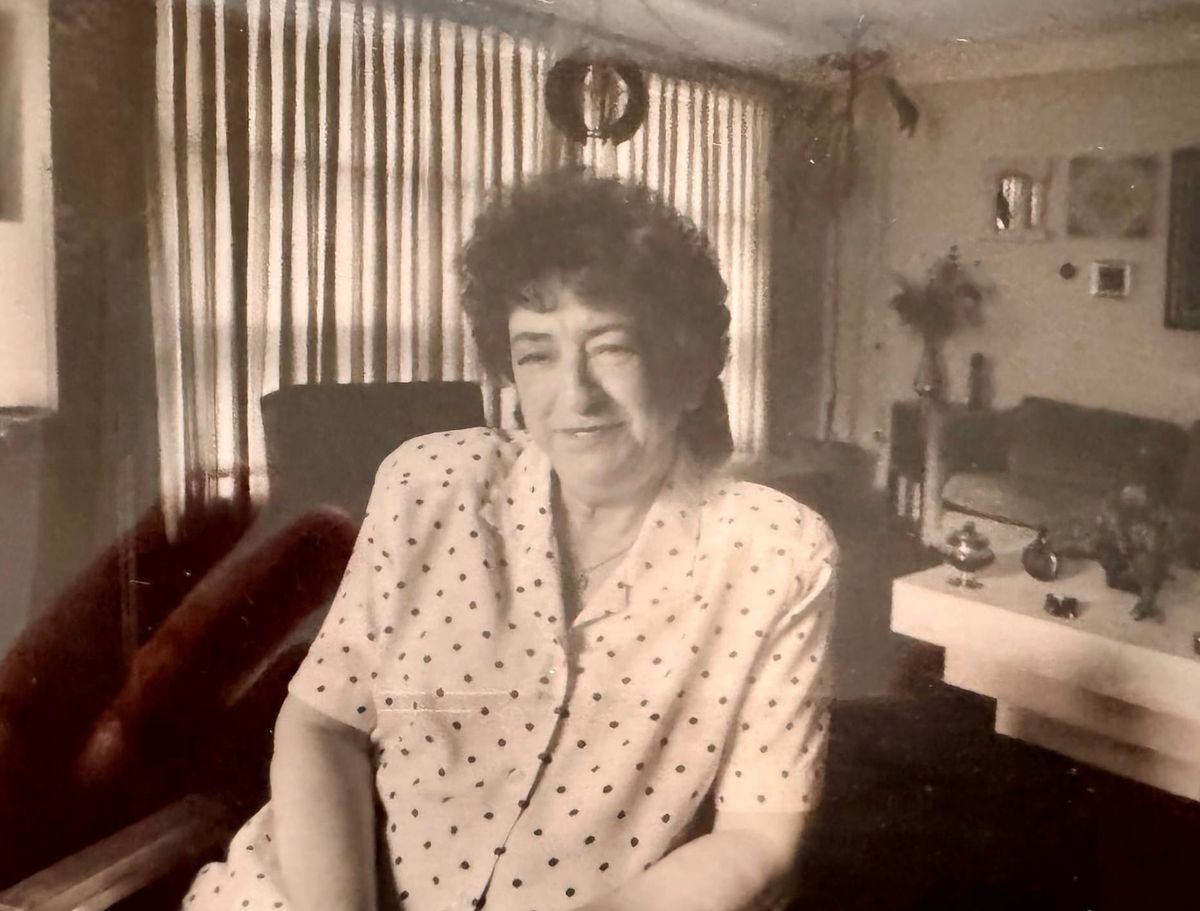
The great thing about the internet is that you can always find events, actions etc that people take to make a difference. My mother was a dedicated political activist for most of her life. Sadly this almost all predates the internet as my mother passed away in 1993. This article attempts to correct that problem by showing you the research I did in many Michigan newspapers to chronicle some of the amazing work that my mom did. Thank you, mom!
And I just want to reiterate that these are only some of the things she did. Those are only the ones I could find evidence from on a major newspaper. with a long archive I could get access to either via mail or see online. There were other things.
Childhood memory
When I was a small child, I remember the phone constantly ringing. I remember, my mother asking my father to just keep the phone off the hook. And I thought my parents were very popular. Later in life, I learned those were bomb threats and death threats because of the work she was doing. Likewise as a small child I was blindsided by unexpected hostilities from schoolmates of mine, one seemingly random confrontation from a former best friend when I was 7 years old., I will never forget.
Former friend:"Your mother is going to get us stabbed."
Me: "Stabbed? She's just trying to integrate our school."
Former friend: "Everyone knows they all carry knives!"
It was a traumatic lesson about racism in the US North, specifically the Detroit All-White suburbs. So she was involved in efforts to desegregate schools, including my own, and the Oakland county jails. But I don’t know the details. But to give you an idea of my mother's commitment, around 1982 Oak Park went from an all white mostly Jewish neighborhood to predominately African-American. When one family member asked, "Don't you want to move, to be back among your friends?" My father replied, "Why? We have nicer neighbors than we ever had before." My mother added, "I am among my friends." Again: thank you mom!
A Michigan legend
Harriet Arnowitz’s public life connected local politics in Oak Park, Detroit, and the state of Michigan, with some of the major reform campaigns of her time. From the 1950s until her death in 1993, she worked in Democratic politics, racial equality, opposition to the Vietnam War, economic reform, and gay and lesbian civil rights. Newspaper coverage documents a career built around organizing: recruiting volunteers, raising money, contacting elected officials, gathering signatures, and making arguments in print. Her influence was principally local and statewide, exercised through campaigns and civic organizations.[1]
Early involvement
Her involvement in Democratic politics was initially established by 1954, when the Detroit Free Press credited her with writing the original lyrics and tunes for “The Folly of 1952,” a political satire that the Oakland County Democratic Committee planned to stage in Pontiac. She also sought elected office. In 1957, she advanced through the Oak Park City Council primary but lost in the general election, receiving 1,440 votes. She appeared among the candidates for council nominations again in 1959. But sadly, did not win.[2]
Arnowitz’s published letters show an early concern with economic security. In 1962, she supported the proposed Medicare program, arguing that illness could exhaust older people’s savings and that assistance should not require them first to become destitute. Although she regarded the proposal as insufficient, she favored building on Social Security to make help more accessible. Health care remained a recurring concern in her later writing.[3]
Civil Rights
By the mid-1960s, she was working on racial discrimination in Oakland County. A January 1967 report identified her, under the contemporary newspaper convention “Mrs. Morris Arnowitz,” as an officer of the Oakland County Human Relations Co-Ordinating Committee. The committee had filed charges with the Michigan Civil Rights Commission concerning discrimination in the hiring of sheriff’s deputies and segregation at the county jail. Arnowitz challenged the sheriff’s account that he had not received an application from a Black candidate until the previous day, saying that two Black applicants had sought deputy positions in 1964 and that one had reapplied in 1965. The sheriff denied hiring discrimination while acknowledging that the jail remained partly segregated. The clipping records the complaint and the competing accounts, rather than a final finding by the commission.[4]
Her work also extended to the Poor People’s Campaign. In June 1968, an Associated Press report named her publicity director for its Detroit support committee. More than 1,200 Detroiters were reported to have left on 33 chartered buses for the campaign’s Solidarity Day in Washington. Arnowitz described support from unions, churches, civil-rights organizations, and local Democrats. A subsequent report quoted her explaining that the committee’s purpose was to draw attention to poor people’s needs after the clearing of the campaign’s Washington encampment.[5]
The following year, she helped organize “Oak Park—A City for Peace,” a campaign calling for American disengagement from Vietnam. In November 1969, the Free Press reported that more than 7,000 residents had signed its petition. The effort involved approximately 300 signature collectors and had backing from the mayor, council members, school officials, and religious leaders. Arnowitz planned to take the petitions to Michigan’s congressional delegation in Washington.
The campaign sought to challenge President Richard Nixon’s claim to speak for a “silent majority.” Arnowitz emphasized that opposition to the war included middle-aged, middle-class citizens who did not necessarily join street demonstrations. Its importance lay in making that opposition visible through an organized suburban constituency; the newspaper account does not establish a direct effect on federal policy.[6]
Democratic Party activist
In 1993, at her Funeral, both Sam Fishman of the UAW and Rep. Joe Forbes described her as the campaign manager for Zolton Ferency’s gubernatorial campaign in 1966. Since 1966 she had been campaign manager or official for among other Michigan State Legislators Sen. Danial Cooper, Rep. Joe Forbes, Rep. Doug Ross, Rep. David Gubow, and Sen. Jack Faxon.
In the early 1970s, Arnowitz combined issue advocacy with electoral work. At an early Michigan Common Cause organizing meeting, she took responsibility for arranging contacts with members of Congress. During U.S. Senator Philip Hart’s 1970 reelection campaign, she handled publicity and scheduling for his wife, Jane Hart. They went on to be lifelong friends.
By October 1971, she was George McGovern’s volunteer campaign coordinator for Michigan, helping develop a statewide network, solicit contributions, and organize fundraising events. In 1972, she was named chair of the Michigan Democratic Party’s Jefferson-Jackson Day dinner, a major statewide fundraising occasion.[7]
During the 1970s, she also served as a district director of the Workmen’s Circle. Letters published under that title show her advocating for immigrant workers, a higher minimum wage, stronger enforcement of labor protections, and national health care. In 1977, she argued that the minimum wage should at least reach the poverty level. In 1978, she supported legislation intended to strengthen labor-law enforcement and criticized President Jimmy Carter’s approach to health-care reform. Her Democratic affiliation did not prevent her from publicly challenging a Democratic administration.[8]
LGBTQ Rights well ahead of the curve
Following the coming out of her son, Jonathan as a gay man, Harriet Arnowitz’s later activism placed increasing emphasis on gay and lesbian civil rights. She did this courageously when LGBTQ rights were extremely controversial, especially in Michigan. A 1991 Free Press feature described how her son Jonathan’s experiences of discrimination helped draw both her and her husband, Morris, known as Mickey, into the movement. She was an officer of the Detroit-area chapter of Parents and Friends of Lesbians and Gays and legislative cochairperson of the Alliance, a group formed to press for gay-rights measures at city and state levels.
One concrete result was Oak Park’s 1990 human-rights resolution. The Free Press described Arnowitz as its architect and as the person who guided it toward passage. The measure sought to make clear that the city’s policy against mistreatment included gay people. Its limits matter: the same report stated that the resolution did not have the force of law and that its practical effect remained uncertain. It was a formal expression of municipal policy, rather than an enforceable antidiscrimination ordinance.[9]
She also worked to change public attitudes. She later became an officer in the P-FLAG Detroit chapter, taking lead in political and media appearances that other members shied away from. In July 1992 she was giving testimony to the United States Committee on Civil Rights. [13]
In March 1993, speaking for Parents and Friends of Lesbians and Gays (P-FLAG), she welcomed a coming-out storyline in Lynn Johnston’s newspaper comic strip For Better or For Worse. Her comments linked ordinary cultural representation with the difficulties gay young people faced. The story appeared in both the Detroit Free Press and The Macon Telegraph, carrying her perspective beyond Michigan.[10]
Arnowitz also co-founded with Henry Messer, the Triangle Foundation an LGBTQ rights advocacy group.[14] She worked very closely with Messer as well as with Jeff Montgomery one of the organization’s first executives. The group’s effectiveness replaced previous organizations like the Michigan Organization for Human Rights. This organization later merged with another advocacy group and is now still the premier LGBTQ+ advocacy group in Michigan called Equality Michigan.
Recognition
Recognition of Arnowitz’s work preceded her death. In August 1987, the Free Press listed her among the recipients of the Michigan 150 First Lady Award for community service. A later account also credited her with founding the local Friends of the Library group, placing her political work alongside broader civic involvement.[11]
Arnowitz died in June 1993, aged 69. That autumn, a Michigan House memorial resolution honoring her became a political controversy. According to contemporary columns, eight legislators withdrew their names as sponsors after the resolution had passed, objecting to its recognition of her gay-rights work. Representative David Gubow, the resolution’s principal sponsor, resisted efforts to remove that recognition. Columnists Hugh McDiarmid and David Kimball criticized the withdrawals and defended an account of her life that included the causes she had actually supported.[12]
The newspaper record supports a measured assessment of Arnowitz’s significance. It does not show that she alone determined the outcome of the larger movements in which she participated. It does show sustained responsibility within them: directing publicity, building campaign organizations, challenging public officials, and helping secure a local declaration of equal treatment. Across changing issues, her contribution was to turn political commitments into the practical work of civic participation. She never shied away from a political challenge she thought was important.
Source note: This article is based on the supplied newspaper collection. News reports, Arnowitz’s own letters, and retrospective opinion columns are distinguished where their evidentiary roles differ. The collection contains gaps and does not constitute a complete biography.
[1] Overview synthesized from the sources listed below; “principally local and statewide” describes the documented scope, not a claim that she had no other activities.
[2] Detroit Free Press, [October 5, 1954] “Democrats Will Stage Satire”; [February 19, 1957] Oak Park primary results; [April 2, 1957] Oak Park election results; [February 15, 1959] City council candidates.
[3] Harriet Arnowitz, letter in Detroit Free Press, [May 27, 1962] in “Writers Support, Oppose President’s Medicare Plan.”
[4] Mary Ann Weston, “Jail Bias Charged in Oakland County,” Detroit Free Press, [January 7, 1967].
[5] “1,200 Detroiters Off To Join ‘Poor’ March,” Associated Press, The Muskegon Chronicle, [June 19, 1968] “Detroiters Delay,” Associated Press, Battle Creek Enquirer, [June 26, 1968].
[6] Judy Wax, “7,000 Oak Parkers Sign Petition to End Viet War,” Detroit Free Press, [November 8, 1969]. A same-day United Press International account in The Saginaw News corroborates her organizing role.
[7] “A New Force Seeks Direction,” Detroit Free Press, [January 10, 1971]; Remer Tyson, “McGovern Backers Get His Campaign Rolling in State,” Detroit Free Press, [October 18, 1971] “Will Head Up Demo Dinner,” United Press International, The Ludington Daily News, [February 28, 1972]; “Democrats Will Honor Johnson,” The Escanaba Daily Press, [April 12, 1972].
[8] Harriet Arnowitz, letters in Detroit Free Press: (immigrants and employment; beginning of letter absent from supplied crop); [August 2, 1977] (minimum wage); [March 16, 1978] (labor reform); [August 14, 1978] (national health care). These establish her positions, not independent verification of every factual claim in the letters.
[9] Frank Bruni, “Straights Who Stand Up for Gays,” Detroit Free Press, [June 2, 1991, opening page] and [continuation and accompanying article]. The continuation supplies her organizational roles; the accompanying article explicitly distinguishes the Oak Park resolution from an enforceable ordinance.
[10] “Gay teen comes out in the comics,” continuation, Detroit Free Press, [March 17, 1993]; John Tanasychuk, Knight-Ridder Newspapers, “‘For Better or For Worse’ character to tell his parents he’s a homosexual,” The Macon Telegraph, [March 19, 1993]. These are overlapping coverage, not evidence of separate advocacy events.
[11] Detroit Free Press, [August 13, 1987], “Congrats!”; [August 18, 1987], “People.” The Friends of the Library role is reported retrospectively in Kimball’s column, reference [12].
[12] Hugh McDiarmid, “Kudos to those who stand up for heroes,” Detroit Free Press, [November 18, 1993]; David Kimball, “Lawmakers balk on honoring gay activist,” Lansing State Journal, [November 25, 1993]. These are opinion columns, not the legislative record itself. McDiarmid supplies the age and month of death. His retrospective date of 1989 for the First Lady award conflicts with the two contemporary 1987 notices; this article follows the contemporary notices. Kimball calls the 1990 Oak Park measure an ordinance; this article follows the more precise 1991 reporting identifying it as a resolution without the force of law.
[13] Forum Transcript, p. 200, evidence presented to the United Stats Committee on Civil Rights by Harriet Arnowitz, representative of Parents and Friends of Lesbians and Gays.
[14] Henry D. Messer and Carl House Papers, 1990-1994