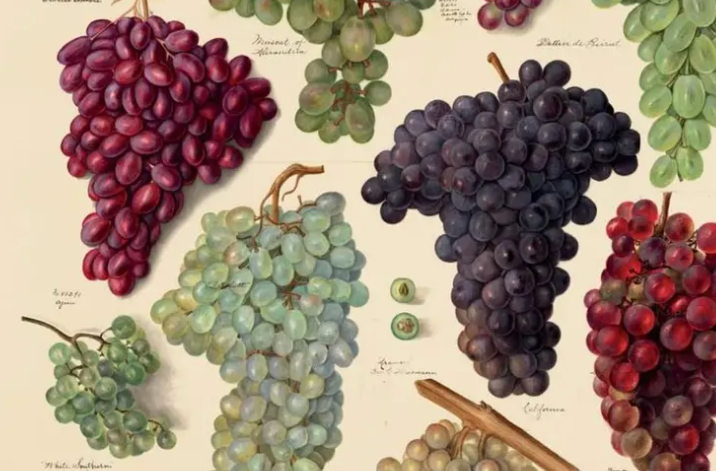
Piedmontese Wines: Part 1 - The Grapes
The more I explore Italian wines the more I realize how little I know. Here I try to get a grip on Piedmontese Wines in 3 posts, the first post is the varieties of grapes in Piedmont. The other posts will cover the appellations and the wineries.

In 2021, on my first visit to Turin, I went to a Piedmontese trattoria known for its authentic local cuisine. The waiter asked if I wanted any help picking out wine. I said with a certain air of apologetic authority and pitying compassion, “I have been drinking Italian wines for over 30 years and I know Piedmontese wines very well. Thank you.” He gave me the wine list. I looked at the list. I desperately searched for “Barolo”, “Barbaresco,” anything. Not even a Gavi or a Gattinara was on the list. When I did see something, I recognized instead of Barbera it was Barbera d’Alba, or Barbera d’Asti, Barbera del Monferrato DOC, Barbera del Monferrato Superiore DOCG. When he came back for my order, I said, “Excuse me, I made a minor mistake. I meant to say I don’t know Piedmontese wines at all. Can you help me?” He chose my first Ruché, and my journey in Piedmontese wines had begun.
I prided myself on a great international collection of wines ranging from Joseph Swan Zinfandels to Burgundy Volnays. While I still pride myself on these wines, with the wines of Piemonte, I find it hard to digest the breadth and depth of the wines you get in Piemonte. Surely for Piedmontese food, I will only have the local wines. But slowly I am also discovering wines like Timorasso or a Gavi DOCG that come close to unseating the Gewürztraminer as the wine to accompany Thai food.
And the great wines and the great producers like Pio Cesare Barolo will have to take a back seat to wines just as great and sadly, regrettably, a fraction of the cost as the makers of the wine here are as varied and amazing as the varieties of grapes.
In the following posts are a catalog of wines and their grape varieties. In the next post on the wines, I will include “tasting notes” when they are wines I have tasted—but you can see there is still a lot we have to discover. For the grapes description I have relied on my own taste and research but for some grapes I have not tried or forgotten I have relied on research (see sources at the end) and I also demote them with an *. A few of the * marked entries were from AI, but I double-checked them both in Wikipedia as well as the thorough Piemonte wine website: https://www.viniepercorsipiemontesi.com/
This post will help you identify wines that you might like based on the descriptors of the grapes. The next post will cover the many appellations, which will help you with the waiter the next time he brings you the wine list. And finally, the third post will help identify a good producer, especially when you are at the wine store.
The Grape Varieties of Piedmont
Piedmont is dominated by indigenous (native) varieties including many grapes that are almost unheard of outside of the region. Unlike other global wine regions, international grapes like Cabernet Sauvignon or Sauvignon Blanc take a massive backseat here and when they do step forward it is not the current trend for international trade market but rather introductions that go back centuries and have been woven into the Piedmontese wine fabric.
The Major Red Grapes
Piedmontese wines are known the world over for their famous reds. Barolo is the king of them all. Enjoyed both as a king and by kings as one of the most renowned wines in the world. But Barolo is but one of so many different wines and grapes as you shall see below.
Nebbiolo
- Origin: Native (documented since at least the 13th century).
- In Brief: The undisputed king of Piemonte. Its color is an unexpected pale brick red and in aged wines can even look anemic in color. But don’t let that color fool you; even when it looks wan, it still capable of packing massive tannins and high acidity and a structure no bulldozer could break down. When aged, it is famous for its "tar and roses" aroma profile. But it is a far more flexible grape capable of strong structure or younger elegance, a grape that can develop amazing tertiary flavors, but can also be youthful and fruity in the right soil and the right hands. Some Nebbiolos can even be considered light and fruity.
- Key Appellations: The big ones that require aging (DOCG): Barolo, Barbaresco, Gattinara. Other appellations that can age or be drink younger: Roero (DOCG), Nebbiolo d’Alba (DOC), Langhe Nebbiolo (DOC).
Barbera
- Origin: Native (first documented in the late 18th century, though likely older).
- In Brief: The wine of the people; as such, it often does not get the attention it deserves, but that is changing. High acidity, very low tannin, and bursting with juicy dark cherry fruit. Barbera makes wines that range from elegant and layered to one-dimensional and cloying. Almost always a hearty wine.
- Key Appellations: Barbera d'Asti, Barbera d'Alba, Nizza, Barbera del Monferrato.
Dolcetto
- Origin: Native (centuries-old regional staple).
- In Brief: Despite its name meaning "little sweet one," it is bone dry. High in tannin, low in acidity, tasting of black almonds and dark plums. This wine will often have a bitter aftertaste, especially in the hands of lackadaisical (or distracted) winemakers. It’s hard to get a winemaker excited to make a perfect Dolcetto that will earn them 8 euros a bottle when they are busy tending to their Barolos or Barbarescos. Dolcetto gets attention where nothing outranks it — appellations like Ovada, Diano and Dogliani, where Dolcetto does not compete with Nebbiolo for attention. With proper attention these areas can produce Dolcettos that are surprisingly rich and layered. Made at its finest, Dolcetto is a bargain for a great wine, as you get a Dolcetto discount. No one is willing to pay 50 euros for a Dolcetto, even if it has received 50 euros of care from the winemaker.
- Key Appellations: Dogliani, Diano d'Alba, Dolcetto d'Alba, Dolcetto d'Ovada DOC and Ovada DOCG.
The Major White Grapes
As you can see, even if they are less known, there are many more interesting and well-regarded white wines. Some that are truly age-worthy and can easily deliver outstanding quality, when they are not treated by winemakers as something meant to be quaffed to wash down seafood.
Cortese
- Origin: Native (documented since 1659).
- In Brief: Crisp, lean, mineral-driven, and high in acidity. Tastes of green apples and citrus. Can often taste austere and more like a picnic wine. But in the finer hands, such as winery Michele Chiarlo, it can be a richly satisfying experience with a liveliness similar to a Chablis. When aged, the finer Gavis can show rich tertiary flavors with a rich price tag to match.
- Key Appellations: Gavi (Cortese di Gavi) DOCG, Cortese dell'Alto Monferrato DOC and Colli Tortonesi
Arneis
- Origin: Native (historically planted next to Nebbiolo to distract birds from the more valuable red grapes). Despite its ancient Piedmontese origin, it has only recently (c. 1960) been a substantial wine grape.
- In Brief: Soft, medium-bodied, and floral with notes of white peach, almond, and pear. Softer acidity and light but noticeable minerality. Aged versions have greater warmth and depth. Unlike Nebbiolo where its finest expression is generally in the Langhe, here the Roero Arneis is the only DOCG.
- Key Appellations: Roero Arneis, Langhe Arneis.
Moscato Bianco
- Origin: Ancient / Native (one of the oldest documented varieties in the region).
- In Brief: Pure perfume. Sweet, low-alcohol, frizzante, smelling of orange blossom, honey, and fresh table grapes. This is one grape I cannot warm to. Its popularity mystifies me: it’s too sweet and the overwhelming perfume makes it a one-tone wine. I am sure there is a great Asti out there, I just haven’t and won’t find it.
- Key Appellations: Moscato d'Asti, Asti Spumante, and various late-harvest sweet wines where the character of the wine can better shine through.
Timorasso*
- Origin: Native, almost extinct until rescued in the 1980s by winemaker Walter Massa.
- In Brief: The "White Barolo." Intensely mineral, high in acid, and gains remarkable petrol and honeyed complexity with a decade of aging.
- Key Appellations: Colli Tortonesi Timorasso (Derthona).
Erbaluce*
- Origin: Native (first written record in 1606).
- In Brief: Electric acidity. Incredibly versatile; used for searingly dry table wines, traditional-method sparkling wines, and rich, noble-rot sweet wines (Passito).
- Key Appellations: Erbaluce di Caluso.
International yet almost native
It has become common practice in recent years for many Italian winemakers to import international wine varieties like Cabernet Sauvignon and Chardonnay and package and market them for the international trade. For that reason, I have steered clear of many merlots, cabs, etc., made by Italian winemakers and favored their local varieties. Piemonte is among the many exceptions to this case because in many instances, the international, or specifically, French grape varietals have a long history that is deeply political, aristocratic, and centuries-old.
During the 19th-century Risorgimento (the unification of Italy), the House of Savoy was based in Turin, and the local Piedmontese nobility was heavily Francophile. They routinely drank Burgundy and Bordeaux, viewing their local Nebbiolo—which was often rustic, sweet, and unstable at the time—as inferior. To fix this, figures like the Count of Cavour (Italy's first Prime Minister) and wealthy aristocrats explicitly imported French cuttings to see if Piedmont could mimic French excellence.
Over time, these French varietals became part of the fabric of the local wines, albeit to a limited degree.
Pinot Nero (Pinot Noir)
- Origin: Approximate Introduction: Late 18th Century / Early 19th Century (c. 1780s–1830s) Initially planted to make Burgundy-style still reds, it found its true calling much later when Pinot Nero was included in Alta Langa, the champagnes method sparkling wines.
- In Brief: Pinot Noir tends to be the main component of sparkling wines. You don’t commonly see any Pinot Nero red wines from Piemonte.
- Key Appellations: Alta Langa DOCG, other various sparkling wines
Merlot
- Origin: Late 18th century, then more widespread around 1880. Merlot arrived surprisingly early. While it officially spread widely across Italy in the late 19th century (around 1880), experimental plantings are recorded at the Cascina San Martino estate in Costigliole d’Asti as early as the late 18th century.
- In Brief: Because Merlot buds early and ripens easily, Piedmontese farmers historically an insurance grape. If the finicky Nebbiolo suffered from a bad, cold autumn, the Merlot was already safely harvested. It remains an approved blending component in regional labels like Monferrato Rosso DOC. Some winemakers also make a Merlot that can be Langhe Rosso DOC. These wines are not in the new world or trendy style but reflect a local approach with its own peculiar style and development.
- Key Appellations: Langhe Merlot DOC, Monferrato Rosso DOC, Langhe Rosso DOC
Chardonnay
- Origin: Mid-19th Century (c. 1840s–1850s), re-popularized in the 1980s. Chardonnay entered Piedmont concurrently with the mid-19th-century sparkling wine boom. When Carlo Gancia began replicating Champagne techniques, Chardonnay cuttings were brought over from France to accompany Pinot Nero. For over a century, it was hidden in sparkling blends or field blends.
- In Brief: Since the 1980s, a massive global wave hit the Langhe. Renowned modern producers (most famously Angelo Gaja with his "Gaia & Rey" in 1983) began making incredibly serious, oak-aged, Burgundian-style still Chardonnays that proved Piedmont's clay-limestone soils could yield world-class white wines.
- Key Appellations: Langhe Bianco DOC
Sauvignon Blanc
- Origin: Late 19th Century (c. 1870s), mainstreamed in the 1980s. Sauvignon Blanc was documented in Piedmont by the famous Italian ampelographer Count Giuseppe di Rovasenda in his universal catalog of 1877. He collected and cultivated thousands of French varieties.
- In Brief: Similar to Chardonnay, it lived a quiet life until the 1980s modernist movement. Winemakers in the Langhe and Monferrato realized that the cooler, high-altitude hillsides unsuitable for Nebbiolo were perfect for capturing the crisp, flinty, aromatic qualities of Sauvignon Blanc.
- Key Appellations: Langhe Sauvignon DOC, Langhe Bianco DOC (Often blended)
Cabernet Sauvignon
- Origin: Introduced c. 1820s. Imported alongside Pinot Nero by the Piedmontese aristocracy. Cavour and his peers experimented with Bordeaux blends in the mid-1800s.
- In Brief: Along with the modernist efforts in Tuscany that yielded “Super Tuscans” using French grapes, so have blends found themselves in catch-all DOCs for blending into Super Piedmontese by winemakers such as Gaja.
- Key Appellations: Langhe Cabernet Sauvignon DOC as single-varietals (requiring at least 85% of the grape). They can also make a generic Langhe Rosso DOC
Syrah
- Origin: The Marquis of San Marzano explicitly brought back cuttings from the famous Hermitage vineyards of the Rhône Valley in 1808.
- In Brief: Along with the modernist efforts in Tuscany that yielded “Super Tuscans” using French grapes, so have blends found themselves in catch-all DOCs for blending into Super Piedmontese by winemakers such as Gaja.
- Key Appellations: Langhe Syrah DOC as single-varietals (requiring at least 85% of the grape). They can also make a generic Langhe Rosso DOC.
The Aromatic & Niche Reds (But nevertheless amazing)
Ruchè
- Origin: Native (rescued from near-extinction by a local parish priest in the 1960s).
- In Brief: A total sensory surprise. Explosively aromatic with notes of rose petals, violets, and sweet spices, with a taste like wild strawberry, sour cherry, raspberry, a berry completely dry and pleasantly bitter on the finish with notes of which could be clove or black pepper.
- Key Appellations: Ruchè di Castagnole Monferrato.
Grignolino*
- Origin: Native (highly prized by nobility in the 16th century).
- In Brief: Extremely pale, almost like a dark rosé, but fiercely tannic and packed with herbal, white-pepper spice.
- Key Appellations: Grignolino d'Asti, Grignolino del Monferrato Casalese.
Freisa
- Origin: Native. a grape related to the Nebbiolo, related genetically or by rumor depending on who you ask.
- In Brief: Rustic, wild, and high in both acid and tannin. Can be made still, sparkling (frizzante), dry, or sweet. But mostly dry and pairs well with meat.
- Key Appellations: Freisa di Chieri, Langhe Freisa.
Brachetto*
- Origin: Native / Ancient.
- In Brief: Sweet, low-alcohol, and gently sparkling. Tastes like macerated strawberries and red flowers.
- Key Appellations: Brachetto d'Acqui.
Pelaverga (Pelaverga Piccolo)*
- Origin: Native (exclusively grown around the village of Verduno).
- In Brief: Light-bodied, bright red fruit, and an unmistakable, intense aroma of freshly cracked black and pink peppercorns.
- Key Appellations: Verduno Pelaverga.
The Aromatic & Niche Whites (But nevertheless amazing)
Nascetta
- Origin: Native (entered on the national grape register in 2001, admitted to Langhe DOC in 2002, and the Novello subzone created in 2010.). A rare, semi-aromatic white grape from the Langhe (specifically Novello) that tastes of wild herbs, citrus, and honey.
- In Brief: A completely lovely soft white wine, a nice switch when you’re ready for a break from an Arneis. It has a livelier acidity as well.
- Key Appellations: Langhe Nas-cëtta del Comune di Novello, Langhe Nascetta DOC.
Baratuciat
- Origin: Native.
- In Brief: A nearly extinct, high-acid white grape from the Susa Valley, recently rescued and allowed in modern regional blends. But I had a sparkling Baratuciat that was a wonderful fruity frizzante with lively acidity.
- Key Appellations: Valsusa DOC or Piemonte DOC
And For sake of completeness:*
- Vespolina: Native. A spicy, peppery red relative of Nebbiolo. Used to add perfume and soften Nebbiolo in Alto Piemonte (Ghemme, Boca).
- Uva Rara: Native. Despite its name meaning "rare grape," it was once widely planted. A plump red grape used to soften the aggressive structure of northern Nebbiolo.
- Croatina: Native (1800s). A deeply colored, rustic, tannic red grape often used in historical blends like Bramaterra.
- Gamba di Pernice: Native. An ancient red grape whose name translates to "Partridge's Leg" due to the bright red color of its vine stems. Grown almost exclusively in Calosso.
- Malvasia di Casorzo / di Schierano: Native. Distinct, red-skinned aromatic clones of the Malvasia family used for sweet, frothy dessert wines.
- Albarossa: Created in 1938. A laboratory cross between Barbera and Chatus (historically misidentified as Nebbiolo di Dronero), engineered to combine Barbera’s color and acidity with deeper structure.
That covers the grape varietals of just the Piedmont region. I hope you have a little more appreciation for the breadth and depth of Piedmontese wines. This post can help you identify wines that you might like based on the descriptors of the grapes. The next post will cover the appellations, which will help you with the waiter when he brings you the wine list. And finally, the third post will help identify a good producer.
Sources that contributed to this post:
https://www.viniepercorsipiemontesi.com/
https://www.castellodineive.it
https://cdn.vinchio.com
https://en.wikipedia.org
https://www.winepassitaly.it
https://winefriend.org
https://www.winespectator.com
https://www.emanuelegambino.com
https://www.vinvm.co.uk
https://www.tenuteventurinifoschi.com
https://www.ufarmer.it
https://drinkitalian.com
https://glossary.wein.plus